Short Sleeve Rash Vests FAQs
When should I wear a short sleeve rash vest for sailing?
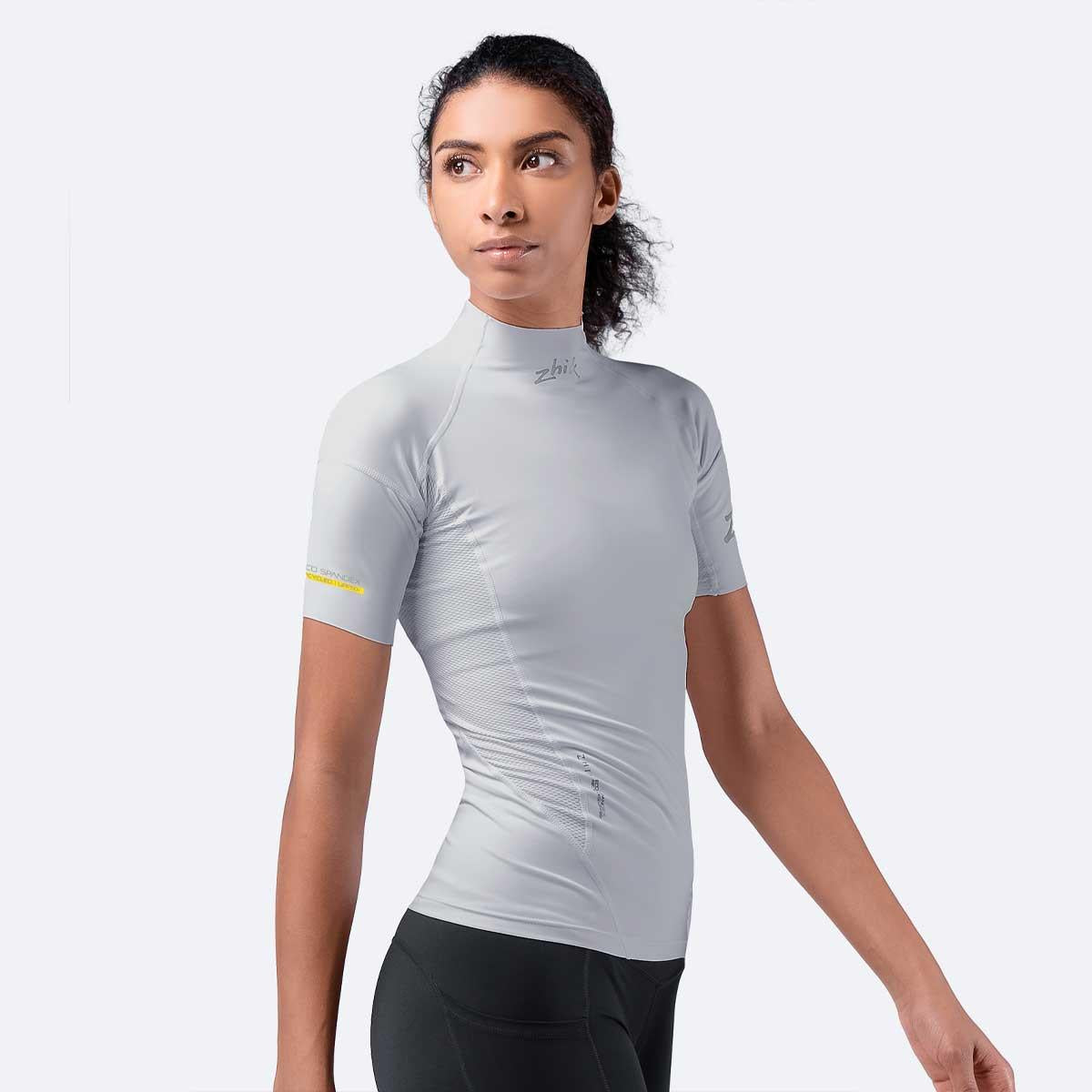
Hot, light wind days from June to August, especially inland where there is no sea breeze to cool you down. A short sleeve keeps your chest covered under a buoyancy aid or long john and leaves your arms free to cool off. On a breezier or cooler day, or anywhere you will spend time in the water, a long sleeve is the better choice. Most sailors who own both wear the short sleeve for a handful of days a year and love it on those days.
Short sleeve rash vest or just a t-shirt?
Rash vest, every time. A cotton t-shirt soaks up water, stays wet all afternoon, chafes under a buoyancy aid and offers no sun protection once it is damp. A rash vest dries in minutes, sits flat against the skin so nothing rubs, and most carry a UV rating. If you only sail a few times a year, a synthetic sports top is a fair halfway house. If you sail every week, buy the rash vest.
Can I wear a short sleeve rash vest under a wetsuit?
Yes, on a warm day. It stops the neoprene chafing your chest and makes a long john easier to pull on. What it does not do is cover your arms, so if the suit has sleeves or the day is cool, a long sleeve rash vest or thermal top underneath is better. In summer, short sleeve under a sleeveless long john is a sensible combination that lets your arms breathe. See our dinghy sailing wetsuits.
How should a short sleeve rash vest fit?
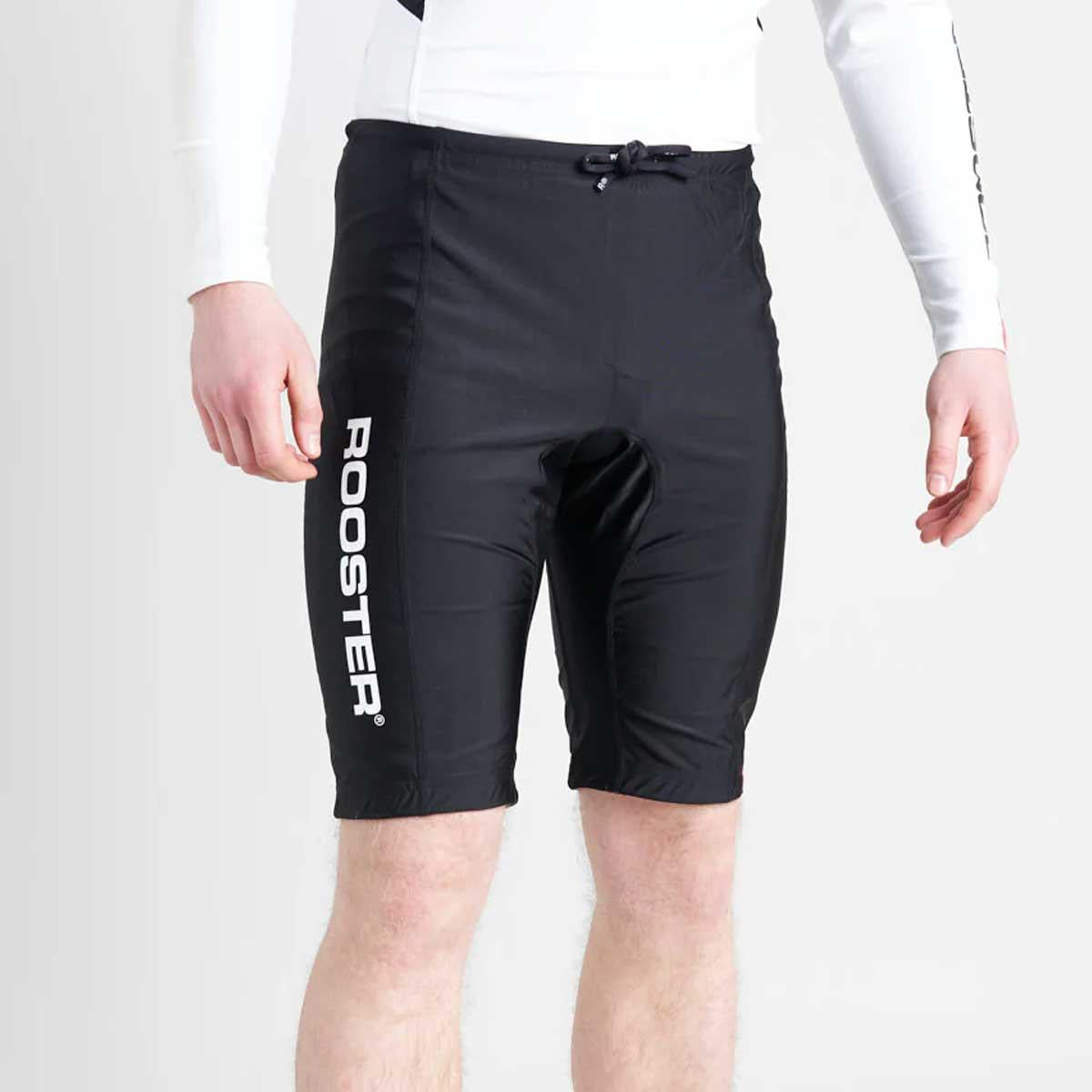
Tight, with no loose fabric. A rash vest only works when it is against the skin, and a baggy one bunches under a buoyancy aid and rubs worse than nothing. Go for your usual size or one down if you are between. The body should be long enough to tuck into a long john or shorts and stay there when you hike. Womens cuts are shorter in the body and narrower at the shoulder and are worth choosing over a mens small.
Do I still need sunscreen with a rash vest?
Yes, on everything the rash vest does not cover, which with a short sleeve is most of your arms, your neck, your face and the backs of your hands. The vest protects your chest, shoulders and back, which are the places you cannot reach to reapply. On a bright day on the water the sun comes from above and off the surface, so a cap, sunglasses and sunscreen on the arms are not optional. See our sailing hats.